
 Global
 Chinese
 United States
 Spain
Spain Russian
 France
 Germany
 Italian
 Japan
Japan Arabic
 Portuguese
 Korean
 Thai
Thai Greek
Greek India
India

Introduction to Ascorbyl Palmitate for Food Preservation
Oxidation is one of the leading causes of quality loss in edible oils, fat-rich foods, and nutritional products. Exposure to oxygen, light, and elevated temperatures gradually destroys valuable nutrients, causes unpleasant odors, affects flavor, and shortens product shelf life. As manufacturers continue to pursue higher product quality and cleaner ingredient solutions, ascorbyl palmitate has become an increasingly important antioxidant for food and nutraceutical formulations.
Unlike ordinary vitamin C, ascorbyl palmitate is a fat-soluble derivative produced by esterifying L-ascorbic acid with palmitic acid. This unique structure enables it to dissolve directly in lipid phases, allowing antioxidant protection exactly where oxidation occurs. Because of this characteristic, it is widely incorporated into edible oils, bakery products, dietary supplements, infant nutrition, and other fat-containing applications where long-term stability is essential.
Product Identity and Technical Profile
Before selecting an antioxidant ingredient, formulators typically evaluate both its chemical identity and manufacturing background. High-quality ascorbyl palmitate combines reliable antioxidant performance with consistent production standards, making it suitable for demanding commercial applications.
Item | Specification |
CAS Number | 137-66-6 |
INCI Name | Ascorbyl Palmitate |
Molecular Formula | C₂₂H₃₈O₇ |
Molecular Weight | 414.53 g/mol |
Synonyms | Vitamin C Palmitate, 6-O-Palmitoyl-L-ascorbic acid, Palmitoyl L-ascorbic acid |
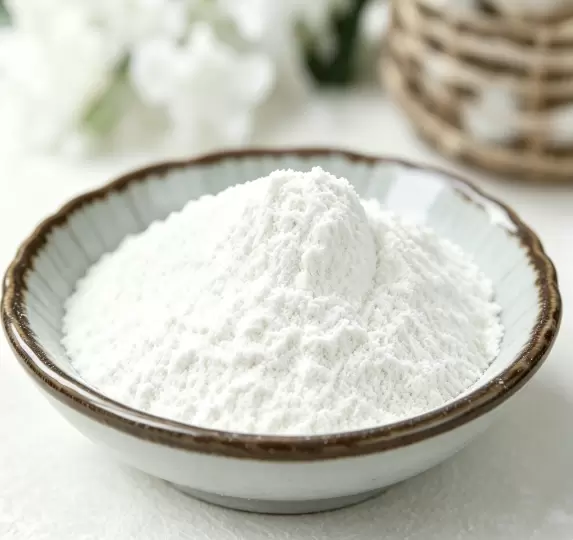
Appearance | White to yellowish powder with a light citrus-like odor |
Production Process | Biological fermentation technology |
Manufacturing Capacity | 60,000 ㎡ self-owned factory with 3,000-ton fermentation capacity |
Produced through biological fermentation technology, Viablife delivers consistent ingredient quality suitable for global food and nutraceutical manufacturers. Supported by a 60,000 ㎡ self-owned production facility and 3,000-ton fermentation scale, the company provides dependable supply capability while maintaining strict quality standards throughout production.
Why Ascorbyl Palmitate Is Effective in Lipid-Based Foods
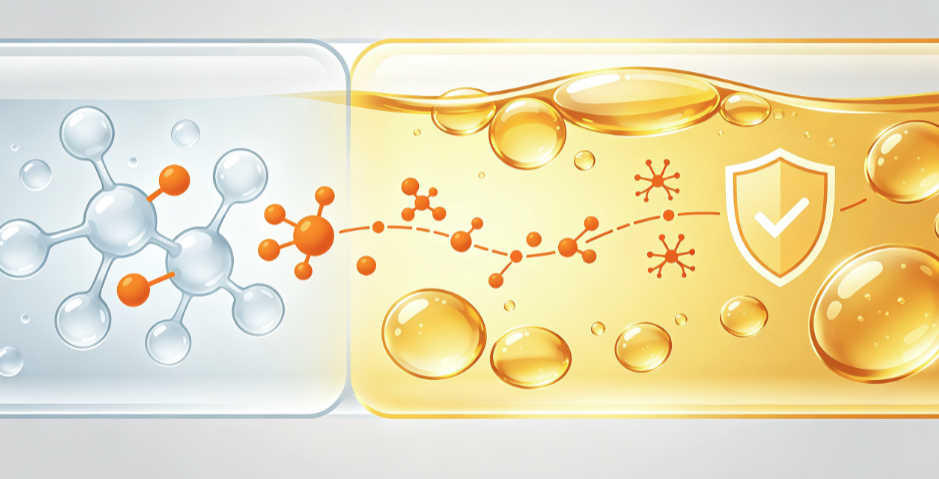
The effectiveness of ascorbyl palmitate comes from its lipophilic nature. Since oxidation primarily begins within fats and oils, antioxidants capable of remaining in the lipid phase generally provide more direct protection than water-soluble alternatives. Instead of remaining in the aqueous portion of a formulation, ascorbyl palmitate disperses throughout oils, helping interrupt free-radical reactions before significant deterioration develops.
This mechanism helps maintain the freshness of edible oils while preserving nutritional quality and sensory characteristics throughout processing and storage. The ingredient is particularly suitable for products rich in unsaturated fatty acids, where oxidation can rapidly affect both flavor and nutritional value if left uncontrolled.
Another important advantage is its compatibility with a broad range of lipid ingredients without significantly affecting color, taste, or aroma. This makes it an attractive antioxidant for manufacturers seeking formulation flexibility across multiple product categories.
Functional Advantages of Ascorbyl Palmitate
Food manufacturers evaluate antioxidants according to several technical characteristics beyond simple antioxidant activity. Ascorbyl palmitate provides multiple functional benefits that contribute to stable product performance.
Functional Property | Practical Benefit |
Lipid solubility | Direct protection inside fats and oils |
Strong antioxidant activity | Delays oxidation and rancidity |
Processing compatibility | Suitable for oil-containing food formulations |
Vitamin C derivative | Adds nutritional recognition while stabilizing lipids |
Excellent synergy | Works efficiently with tocopherols and natural antioxidants |
These properties allow manufacturers to improve shelf stability while maintaining formulation simplicity and consistent production quality.
Processing Benefits During Food Manufacturing
Throughout food production, ingredients are exposed to oxygen, mechanical agitation, heat, and storage conditions that accelerate oxidation. Lipid-rich products are especially vulnerable because unsaturated fatty acids react readily with oxygen.
For maximum efficiency, ascorbyl palmitate should first be dispersed into the oil phase before combining with water-based ingredients. Proper dispersion promotes uniform antioxidant distribution throughout the finished formulation and improves protection of sensitive lipid components.
The ingredient also demonstrates favorable thermal stability under typical food processing conditions, making it suitable for bakery production, edible oil processing, nutritional supplements, and various manufacturing operations requiring controlled heat exposure.
Applications of Ascorbyl Palmitate Across Food Categories
Bakery Products
Bakery formulations rely heavily on fats for texture, softness, flavor, and mouthfeel. Lipid oxidation can gradually reduce product quality during storage. Incorporating ascorbyl palmitate into fat-containing bakery formulations helps preserve freshness while slowing oxidative deterioration of shortening and vegetable oils used during production.
Its favorable processing stability also allows manufacturers to maintain antioxidant protection during baking without introducing unnecessary formulation complexity.
Edible Oils and Fat-Based Foods
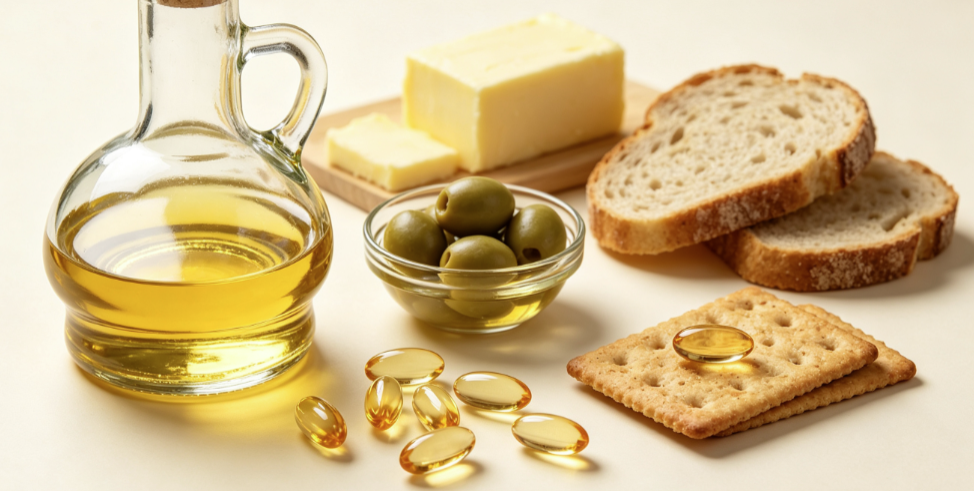
One of the most common applications for ascorbyl palmitate is the protection of edible oils. Vegetable oils, frying oils, shortening, margarine, and blended specialty oils all benefit from improved oxidative stability.
By reducing oxidative reactions, the ingredient helps maintain flavor, nutritional value, and overall product quality throughout transportation, storage, and retail distribution.
Nutraceutical Formulations
Oil-based dietary supplements frequently contain ingredients that are highly susceptible to oxidation. Soft gels, fish oil capsules, omega-3 products, and lipid nutritional formulations often incorporate ascorbyl palmitate vitamin c derivatives to stabilize sensitive oils while supporting the nutritional profile associated with vitamin C.
Its lipid compatibility makes it especially valuable in formulations where conventional water-soluble antioxidants cannot provide sufficient protection.
Infant Nutrition
In approved applications, ascorbyl palmitate functions as an antioxidant stabilizer that helps preserve sensitive lipid ingredients within infant nutritional products. Protecting these components contributes to maintaining product quality throughout the intended shelf life.
The Synergistic Potential: Ascorbyl Palmitate and Hydroxytyrosol
Another reason formulators value ascorbyl palmitate is its ability to complement other antioxidants instead of functioning independently. Combining different antioxidant mechanisms often produces broader protection than relying on a single ingredient alone.
One of the most widely recognized combinations pairs ascorbyl palmitate with tocopherols (vitamin E). While each antioxidant performs differently, together they help interrupt oxidative reactions more efficiently across lipid systems.
Natural antioxidants such as rosemary extract may also be combined with ascorbyl palmitate to strengthen overall oxidative stability. For premium nutritional formulations, pairing lipid-soluble antioxidants with complementary compounds allows manufacturers to create broader protection throughout the entire product matrix.
Frequently Asked Questions
What is ascorbyl palmitate used for?
Ascorbyl palmitate is primarily used as a fat-soluble antioxidant that protects edible oils, fats, nutritional supplements, and other lipid-containing foods from oxidative deterioration while helping extend product shelf life.
Why is ascorbyl palmitate preferred for oil stability?
Its lipophilic structure enables it to dissolve directly into fats and oils, allowing antioxidant activity exactly where oxidation begins. This makes it highly effective for protecting edible oils and other fat-containing ingredients.



 Leave a Message