
 Global
 Chinese
 United States
 Spain
Spain Russian
 France
 Germany
 Italian
 Japan
Japan Arabic
 Portuguese
 Korean
 Thai
Thai Greek
Greek India
India
In the field of modern functional skincare, few ingredients have gained as much scientific recognition as nicotinamide (niacinamide, CAS No.:98-92-0). Known for its exceptional stability, safety, and multifunctional biological activity, nicotinamide is now widely incorporated into well-aging cosmetics. In 2022, researchers conducted a PvN combination study using polydeoxyribonucleic acid (PDNA), Vitamin C, and nicotinamide on human keratinocytes, epidermal melanocytes, and fibroblasts. The results demonstrated that nicotinamide benefits for skin include a reduction in pigmentation and a measurable improvement in skin elasticity. These findings are closely linked to nicotinamide’s complex well-aging signaling pathways, which influence pigmentation, inflammation, barrier repair, collagen synthesis, and cellular longevity.
As high quality skincare ingredients manufacturing factory, Viablife will share the the scientific foundation behind the well-aging role of nicotinamide for skin in cosmetics, offering a clear, structured, and research-based discussion that aligns with the latest mechanistic insights.
Nicotinamide Benefits for Skin in Scientifically Proven Well-Aging Applications
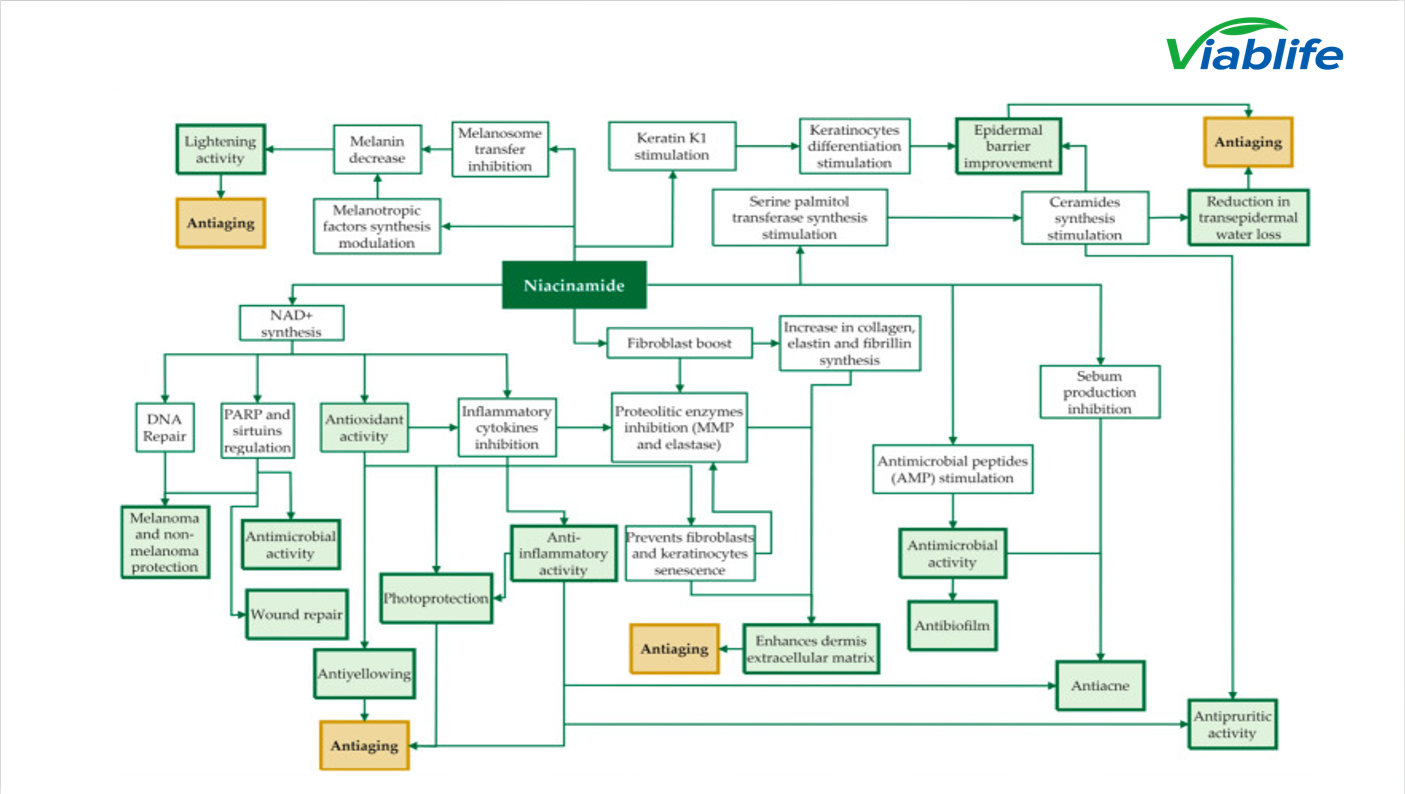
Nicotinamide benefits for skin arise from its involvement in essential biochemical reactions, particularly NAD⁺metabolism. As a precursor of NAD⁺, it supports cellular energy production, DNA repair, and antioxidant defense—functions that naturally decline with age. When NAD⁺ levels drop, cells experience mitochondrial dysfunction, increased oxidative stress, and slower regeneration. Topical nicotinamide helps restore these functions, contributing to visible anti-aging outcomes.
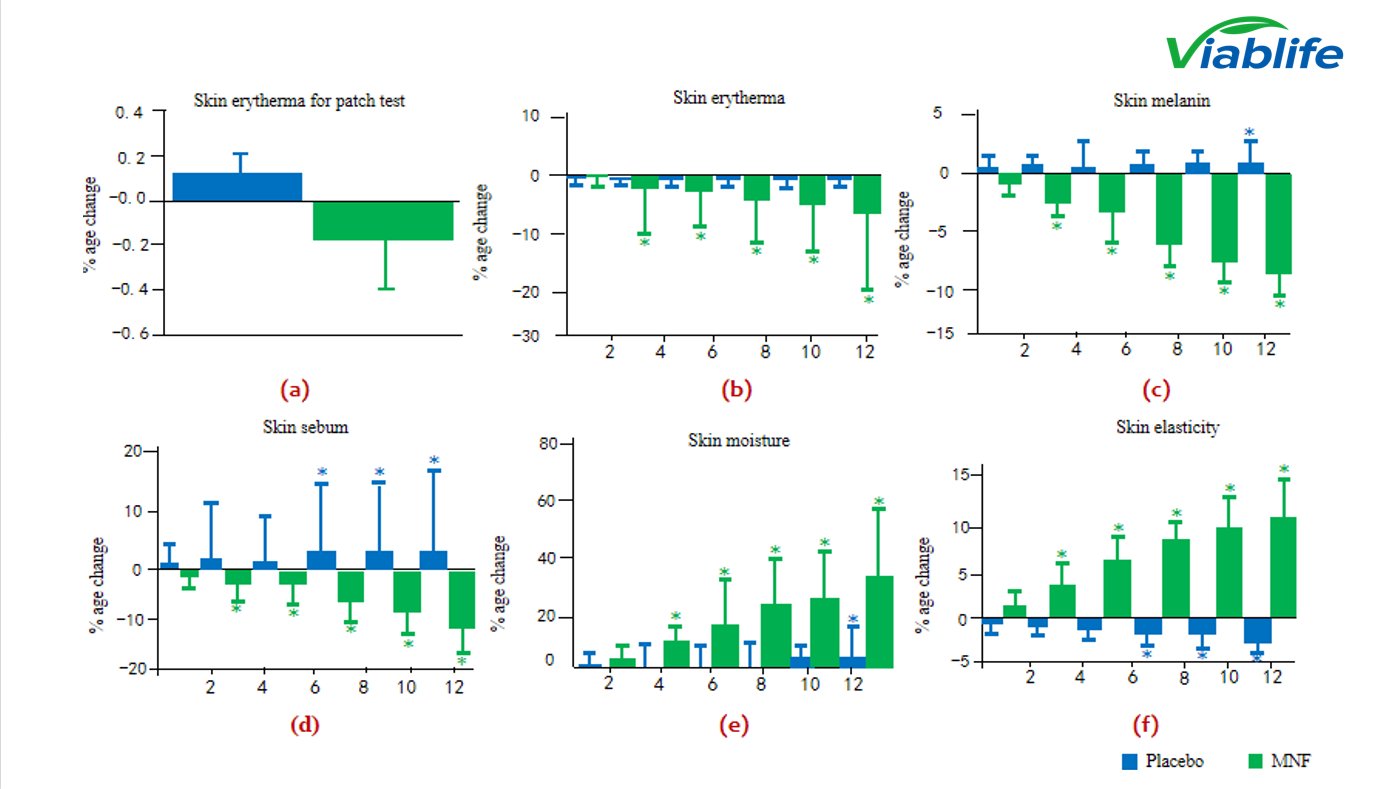
In the 2022 PvN study, nicotinamide displayed clear activity in reducing melanin production, regulating pigmentation transfer, and strengthening extracellular matrix components—confirming its value in treating discoloration and restoring elasticity simultaneously.
Nicotinamide Well-Aging Signaling Pathways Demonstrating Its Multifunctional Effects
NAD⁺Synthesis Pathway Supporting Cellular Longevity, One of the core well-aging mechanisms is nicotinamide’s ability to boost NAD⁺levels. This activation enhances:
• DNA repair responses.
• Cellular resistance to oxidative stress.
• Mitochondrial activity.
These functions help slow intrinsic and extrinsic aging, allowing the skin to maintain healthier structure and function over time.
Pigmentation Regulating Pathways for Even Skin Tone,Research shows that nicotinamide reduces melanosome transfer from melanocytes to keratinocytes. Rather than destroying pigment cells, it safely balances pigment distribution. This mechanism results in:
• Reduced dark spots.
• More uniform skin tone.
• Minimized appearance of UV-induced pigmentation.
These effects correspond to the PvN study results showing clear decreases in melanin percentages.
Anti-Inflammatory and Antioxidant Pathways,Inflammation accelerates aging by breaking down collagen and damaging the barrier. Nicotinamide inhibits inflammatory cytokines and supports antioxidant enzyme systems, resulting in:
• Reduced erythema.
• Improved skin barrier tolerance.
• Protection from environmental stressors.
These effects were reflected in the study’s erythema data, which showed noticeable reductions in redness.
Extracellular Matrix and Fibroblast Activation Pathways,Within the dermis, nicotinamide enhances fibroblast activity, contributing to:
• Increased collagen synthesis.
• Elevated elastin and fibrillin production.
• Improved dermal density.
The 2022 findings demonstrated measurable improvements in skin elasticity, confirming nicotinamide’s role in strengthening extracellular matrix integrity.
Nicotinamide influences sebum pathways, helping maintain balanced oil production while supporting antimicrobial peptide activity. This contributes to clearer, healthier skin and prevents inflammation-driven aging.
Nicotinamide and Well-Aging Mechanisms Working Together in Cosmetic Applications
Barrier Repair and Moisturization
Through stimulation of ceramide synthesis and support of natural moisturizing factors, nicotinamide strengthens the protective barrier, which is essential for preventing water loss and defending against environmental stress.
Protection Against UV-Induced Damage
By supporting DNA repair and regulating cell-signaling pathways, nicotinamide reduces photodamage that leads to wrinkles, pigmentation, and premature aging.
Maintaining Dermal Structure
Nicotinamide prevents the degradation of structural proteins by inhibiting matrix metalloproteinases (MMPs), reducing collagen breakdown and contributing to smoother and firmer skin.
Conclusion
Nicotinamide benefits for skin are supported by extensive mechanistic and clinical data. Through its effects on pigmentation control, barrier repair, fibroblast stimulation, inflammation reduction, and NAD⁺enhancement, nicotinamide stands out as one of the most valuable ingredients in well-aging cosmetics.
The 2022 PvN study reinforces its multifunctional role, showing reductions in pigmentation and significant gains in elasticity. As cosmetic science continues to evolve, nicotinamide will remain a cornerstone ingredient in skincare designed to delay aging, repair visible damage, and maintain long-term skin health.
Data Source:
Mechanistic Insights into the Multiple Functions of Niacinamide: Therapeutic Implications and Cosmeceutical Applications in Functional Skincare Products
A Mixture of Topical Forms of Polydeoxyribonucleotide, Vitamin C, and Niacinamide Attenuated Skin Pigmentation and Increased Skin Elasticity by Modulating Nuclear Functions
 Leave a Message