
 Global
 Chinese
 United States
 Spain
Spain Russian
 France
 Germany
 Italian
 Japan
Japan Arabic
 Portuguese
 Korean
 Thai
Thai Greek
Greek India
India

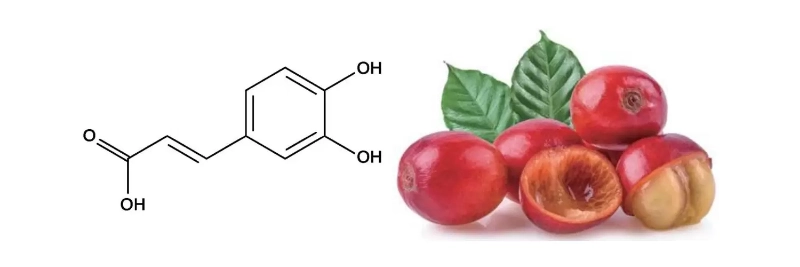
Caffeic acid, also known as 3,4-dihydroxycinnamic acid (CAS No. 331-39-5), has moved into the spotlight as a multifunctional cosmetic ingredient valued for its broad biological activity and wide-ranging formulation potential. In this blog post, Viablife, as a high purity cosmetic raw material solutions supplier, will share the properties of caffeic acid for skin, and its applications, etc.
Properties of Caffeic Acid for Skin Care
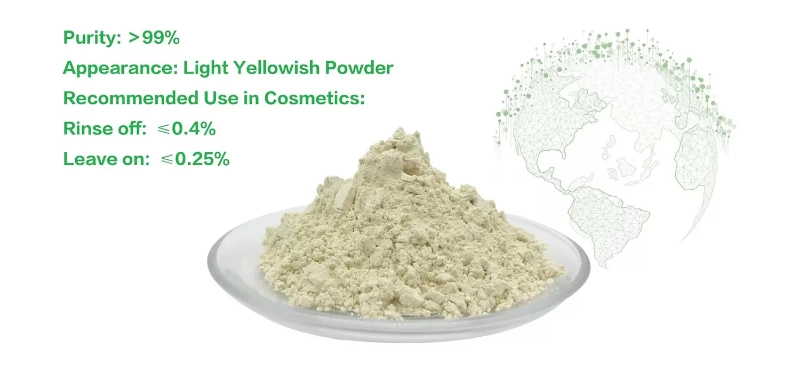
Caffeic acid appears as a light yellow to yellowish-brown crystalline material. Its chemical structure allows it to participate in oxidative and biological processes relevant to skin health. From a formulation perspective, its slight solubility in water and better solubility in hot water, cold ethanol, and ethyl acetate shape how it can be incorporated into cosmetic systems.
These solubility behaviors make caffeic acid suitable for emulsions, serums, essences, and functional concentrates where dual-phase or solvent-assisted systems can support optimal dispersion. The crystalline nature also allows it to be introduced as a solid raw material with predictable handling characteristics, provided its purity and color grade meet cosmetic requirements.
Why Purity Matters When Using Caffeic Acid in Skincare
Most caffeic acid available commercially exhibits 70–90% purity, typically presenting as a dark yellow powder. This coloration is often a visible sign of impurities formed during extraction or processing. When used in cosmetic formulations, low-purity materials may introduce problems such as:
• Color instability in finished products
• Unwanted fragrance notes or off-odors
• Reduced functional performance due to impurity interference
• Challenges in meeting high-end cosmetic clarity or aesthetic requirements
These issues become more pronounced in transparent or lightly tinted skincare formulations where visual purity is essential.
To address these challenges, Viablife has developed a precise biosynthesis and fermentation platform capable of producing high-purity (>99%) caffeic acid. This upgraded material possesses:
• A significantly lighter appearance
• Higher consistency in batch quality
• Improved compatibility with emulsions, gels, and serums
• Greater stability across typical cosmetic pH ranges
This level of refinement transforms caffeic acid from a difficult ingredient into a reliable, formulation-friendly active suitable for premium skin products.
Multifunctional Benefits of Caffeic Acid for Skincare Applications
Antioxidant Power of Caffeic Acid in Skin Wellness
One of the core reasons caffeic acid is valued in skincare is its dual-effect antioxidant activity, demonstrating effectiveness in both biological systems and ingredient environments. Its molecular structure allows it to donate hydrogen atoms while stabilizing reactive species, supporting skin protection strategies that target environmental stressors.
In formulation, antioxidants like caffeic acid help maintain:
• The freshness of oils and active ingredients within the product
• The resilience of the skin barrier when applied topically
• The support of skin’s natural defense mechanisms under environmental exposure
This dual functionality positions caffeic acid as both a product stabilizer and a direct skin-benefiting active.
Caffeic Acid’s Skincare Potential in Immune Support
Caffeic acid has long been recognized for its immunomodulatory behavior, making it relevant for products that seek to help maintain skin balance. As the skin acts as a primary immune barrier, supporting its natural responses is a key component of modern formulations aiming to improve overall skin robustness.
Its role in this area provides conceptual value for:
• Barrier-care products
• Recovery creams
• Protective day serums
• Post-treatment cosmetic solutions
By influencing pathways relevant to skin homeostasis, caffeic acid contributes to maintaining a stable and resilient surface environment.
Anti-Inflammatory Activity of Caffeic Acid in Skincare Concepts
The beauty industry continues to prioritize ingredients that support calm, comforted skin. Caffeic acid’s anti-inflammatory activity offers a foundation for developing formulas targeted at reducing visible redness, promoting even tone, and improving sensory comfort.
Cosmetic applications where this function is especially beneficial include:
• Soothing toners
• Restorative moisturizers
• Redness-reducing solutions
• Sensitive-skin friendly serums
Its activity aligns well with formulations designed to create gentle, supportive product experiences without relying on harsher actives.
Cosmetic Functions of Caffeic Acid in Daily Skin Products
Beyond its biological activity, caffeic acid also provides practical cosmetic benefits that enhance its versatility in product development. It is valued for:
• Sun-protective contribution (formula-supporting, not as a sunscreen replacement)
• Whitening and brightening effects through melanin-influencing pathways
• Antibacterial properties that support cleaner, fresher cosmetic systems
These characteristics make caffeic acid suitable for brightening essences, anti-pollution products, complexion-improving formulas, and daily protective skincare designed for urban environments.
High-Purity Caffeic Acid for Skin Formulation Advantages
As personalization and precision become defining factors in skincare development, the cosmetic industry is shifting toward ingredients that are not only effective but consistent, traceable, and clean-sourced. High-purity caffeic acid produced through Viablife’s biosynthesis and fermentation technology offers several benefits that support these goals:
1. Cleaner Aesthetics and Better Stability
Reduced impurities lead to improved clarity and color quality in formulations, enabling its use in transparent or lightly tinted products.
2. Higher Functional Accuracy
A purified active ensures predictable behavior, which is essential when targeting oxidative stability or brightening effects.
3. Improved Compatibility with Multiple Formulation Types
Ultra-high purity minimizes disruptive interactions, making it easier to integrate into emulsions, gels, lotions, hydroalcoholic systems, and water-based serums.
4. Greater Appeal for Premium and Natural-Positioned Brands
Biotechnological production supports sustainability narratives while meeting consumer expectations for high-grade, science-based actives.
Conclusion
Viablife’s biosynthetic caffeic acid offers a rare combination of antioxidant strength, soothing potential, skin-brightening functionality, and formulation versatility. While traditional caffeic acid sources struggle with dark coloration and inconsistent purity, Viablife’s biosynthetic caffeic acid—with high purity (>99%)—provides the performance, stability, and aesthetic qualities necessary for advanced skincare products.
As the cosmetics industry embraces biotechnological ingredients with superior clarity and functional precision, caffeic acid stands out as a valuable and future-forward active that enables cleaner formulas, broader applications, and more reliable skin benefits. Its multifaceted properties make it a compelling choice for formulators developing next-generation antioxidant, brightening, and protective skincare solutions.

 Leave a Message