
 Global
 Chinese
 United States
 Spain
Spain Russian
 France
 Germany
 Italian
 Japan
Japan Arabic
 Portuguese
 Korean
 Thai
Thai Greek
Greek India
India

Protocatechuic acid (PCA) is a natural phenolic compound found in various plants, fruits, and vegetables. PCA has attracted attention not only for its biochemical properties but also for its growing potential applications in multiple industries, including pharmaceuticals and food preservation. In this blog post, Viablife, as a high quality raw materials manufacturing factory, will share the uses and impact of biosynthesized protocatechuic acid across industries.
Structural Characteristics of Protocatechuic Acid
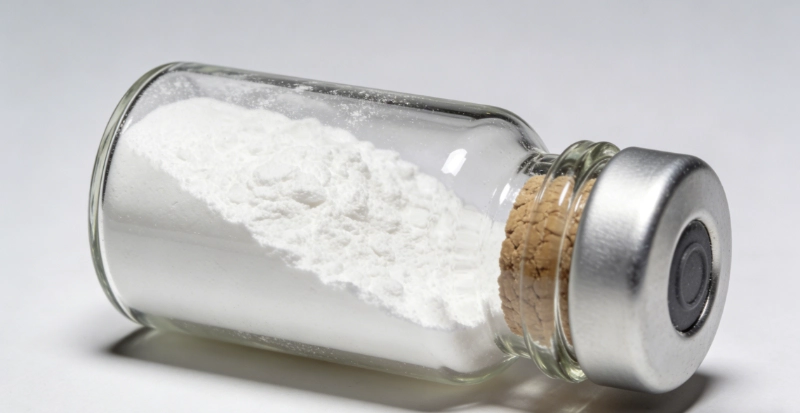
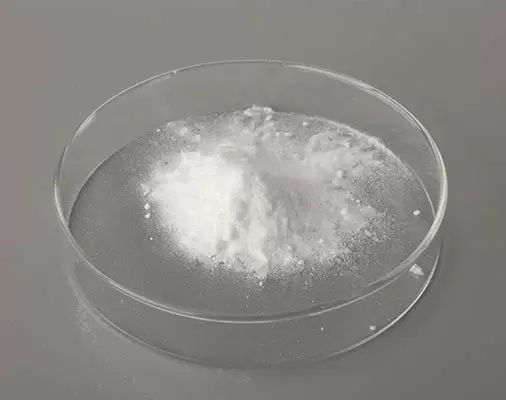
Protocatechuic acid, chemically known as 3,4-dihydroxybenzoic acid (CAS No.: 99-50-3), exhibits a simple yet effective structure that contributes to its functional properties. The presence of hydroxyl groups on the aromatic ring enhances its ability to interact with free radicals, lending it antioxidant potential. Its crystalline form ensures high purity, and the controllable particle size facilitates rapid dissolution and effective integration into various formulations.
Purity Standards and Industrial Relevance
High-purity PCA, exceeding 98%, is essential for applications demanding precision, such as pharmaceutical formulations. Low impurity levels minimize side reactions and ensure predictable performance in chemical processes. Controlled crystallization processes further guarantee consistent particle size, which is critical for uniform dissolution and bioavailability in nutraceutical and cosmetic products.
Role in Antioxidant Mechanisms
Protocatechuic acid’s primary bioactivity is its antioxidant function. The molecule scavenges reactive oxygen species (ROS) and protects cellular components from oxidative stress. PCA can stabilize lipid membranes and prevent DNA damage, making it an intriguing candidate for anti-aging and neuroprotective interventions. Its antioxidant capacity also finds relevance in food preservation, extending shelf life by mitigating oxidative degradation.
Influence on Metabolic Pathways
By modulating enzyme activity, PCA can influence glucose metabolism and lipid profiles, indicating potential benefits in managing metabolic disorders. Such properties underscore the compound’s versatility beyond direct antioxidative effects, providing a foundation for targeted therapeutic research.
Integration into Pharmaceutical Formulations
Pharmaceutical applications of protocatechuic acid require careful consideration of solubility and stability. Controllable particle size enables rapid dissolution, which is crucial for ensuring consistency in dosage forms. Its high purity and low impurity content facilitate incorporation into tablets, capsules, and liquid formulations without complex extraction or purification procedures.
Use in Cosmetic and Nutraceutical Products
In the cosmetic industry, PCA’s antioxidant and anti-inflammatory properties contribute to formulations designed for skin protection and rejuvenation. By neutralizing free radicals and mitigating oxidative stress, PCA-containing products can reduce the signs of aging and support skin barrier integrity. Similarly, in nutraceuticals, PCA supports systemic antioxidant capacity, enhancing overall health when included in dietary supplements.
Industrial Extraction and Production Considerations
Efficient production of PCA involves optimizing extraction from natural sources or synthesizing it chemically with minimal by-product formation. Low impurity levels and precise particle control indicate that it meets advanced manufacturing standards. Such control ensures that PCA is suitable for high-value applications, including food additives, pharmaceuticals, and research-grade chemicals.
Environmental and Sustainability Perspectives
Protocatechuic acid is predominantly plant-derived, making its extraction inherently linked to sustainable practices. The ability to achieve high purity without extensive chemical processing aligns with green chemistry principles. Additionally, PCA’s potential role in natural preservation strategies may reduce reliance on synthetic additives, supporting eco-friendly industrial solutions.
Conclusion
Protocatechuic acid represents a versatile and scientifically valuable molecule with applications across pharmaceuticals, cosmetics, food, and research. Its chemical stability, high purity, and antioxidant mechanisms make it a cornerstone for innovations seeking natural and effective solutions. By understanding its structure, purity requirements, and functional properties, industries can better integrate PCA into advanced applications while maintaining quality and efficacy.
 Leave a Message