
 Global
 Chinese
 United States
 Spain
Spain Russian
 France
 Germany
 Italian
 Japan
Japan Arabic
 Portuguese
 Korean
 Thai
Thai Greek
Greek India
India

Human skin is not simply a passive covering; it is a highly organized biological barrier. At the center of this structure lies the stratum corneum, a lipid-rich layer often described through the “brick and mortar” model. Corneocytes act as bricks, while intercellular lipids form the mortar that seals the barrier. Ceramide NP for skin plays a central role in this lipid matrix, directly influencing cohesion, permeability control, and resilience against environmental stress.
Unlike generic emollients that sit on the surface, Ceramide NP integrates into the skin’s own architecture. Its molecular similarity to endogenous ceramides allows it to align within lipid lamellae, reinforcing the ordered structure required for barrier competence. From a structural science perspective, this compatibility explains why ceramide-based formulations outperform many traditional moisturizing systems in maintaining long-term skin stability.
Structural Identity of Ceramide NP Within the Stratum Corneum
Ceramide NP, also referred to as Ceramide 3 in some classification systems, is chemically identical to one of the natural ceramides found in healthy human skin. This structural identity is not a marketing concept but a biochemical reality. The molecule consists of a sphingosine backbone linked to a saturated fatty acid, enabling tight molecular packing within lipid bilayers.
In well-organized skin, ceramides account for approximately 50% of the intercellular lipids by weight. When Ceramide NP levels decline due to age, environmental exposure, or inflammatory skin conditions, the lamellar structure becomes disordered. This disruption increases permeability and weakens the barrier. Reintroducing structurally identical ceramides supports the reassembly of these lipid layers, restoring order rather than masking dysfunction.
Ceramide NP and Trans Epidermal Water Loss Regulation
One of the most measurable outcomes of barrier impairment is increased transepidermal water loss (TEWL). Elevated TEWL reflects gaps within the lipid matrix that allow water to escape from deeper layers of the epidermis. Ceramide NP for skin barrier repair directly addresses this issue by reinforcing lipid continuity.
From a biophysical standpoint, ceramide molecules reduce water diffusion by creating densely packed lipid domains. This reduces evaporation while maintaining selective permeability for oxygen and small molecules. Unlike occlusive agents that form an external film, Ceramide NP functions internally, stabilizing the barrier from within and contributing to sustained hydration rather than short-term moisture retention.
Biomimetic Ceramide NP in Modern Skin Formulation Design
The concept of biomimicry has become a guiding principle in advanced skin formulation. Ceramide NP exemplifies this approach because it does not introduce foreign structures but mirrors the skin' s own lipid composition. This alignment minimizes the risk of incompatibility and supports predictable integration into the stratum corneum.
Formulators increasingly combine Ceramide NP with cholesterol and free fatty acids in ratios that resemble physiological skin lipids. This tri-lipid system reflects the natural organization of the barrier, promoting self-assembly into lamellar phases after application. Such structurally informed design marks a shift from surface-level moisturization toward barrier reconstruction based on skin biology.
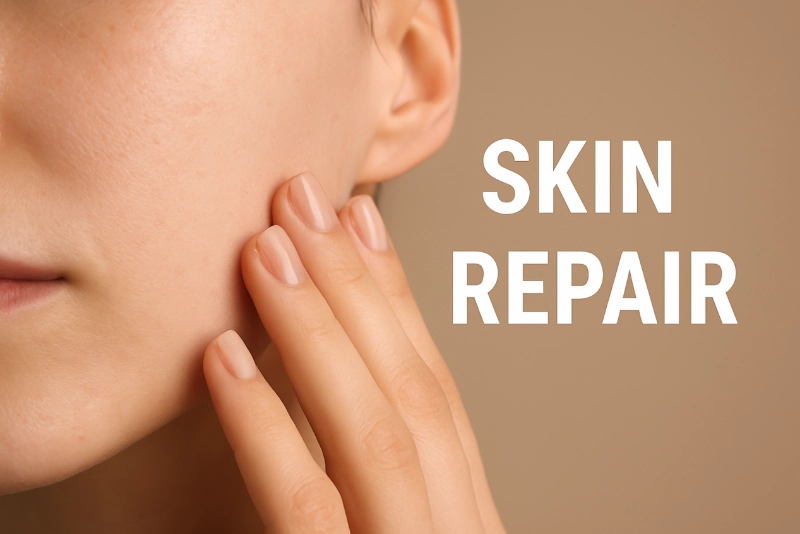
Sensitive Skin and Ceramide NP Structural Deficiency
Sensitive skin is often discussed in terms of reactivity, but structurally it is frequently characterized by ceramide depletion. Reduced ceramide content weakens lipid cohesion, allowing irritants to penetrate more easily and trigger inflammatory responses. In this context, Ceramide NP for sensitive skin addresses a root cause rather than symptoms.
By restoring lipid order, Ceramide NP reduces permeability and lowers the likelihood of irritant penetration. This structural reinforcement supports a calmer skin environment over time, explaining why ceramide-focused routines are commonly recommended for compromised or reactive skin profiles. The benefit arises not from soothing agents alone, but from rebuilding the barrier’s molecular framework.
Ceramide NP and Age Related Barrier Changes
Aging skin undergoes measurable changes in lipid synthesis and organization. Ceramide production declines with age, contributing to dryness, roughness, and reduced elasticity. From a structural standpoint, this decline disrupts lamellar spacing and weakens barrier cohesion.
Incorporating Ceramide NP into skincare strategies aligns with an age-adaptive approach to barrier maintenance. Rather than targeting visible signs alone, Ceramide NP supports the structural foundation that underpins hydration retention and surface smoothness. This perspective reframes well-aging care as a matter of maintaining lipid architecture, not merely stimulating turnover or masking texture.
Clinical Validation and Trust in Ceramide NP Ingredients
Consumer confidence in skincare increasingly depends on clinical substantiation. Ceramide NP stands out because its function is grounded in dermatological science rather than trend-driven claims. Clinical observations consistently link ceramide replenishment with improved barrier integrity, reduced TEWL, and enhanced skin comfort.
This scientific grounding has strengthened dermatologist endorsement of ceramide-based regimens, particularly for long-term barrier management. As trust in evidence-based skincare grows, structurally identical lipids such as Ceramide NP continue to gain acceptance as foundational components rather than optional additives.
Market Momentum Driven by Barrier Health Awareness
Rising awareness of skin barrier health has reshaped the global ceramide landscape. Increased prevalence of sensitive skin concerns, combined with demand for clinically validated ingredients, has positioned Ceramide NP as a strategic material within the skincare supply chain.
In 2025, the global Ceramide NP (3) market was valued at approximately USD 53.8 million. Forecasts indicate that the market is expected to reach USD 154.8 million by 2035, reflecting a compound annual growth rate of 11.1% during the forecast period. This growth trajectory is closely linked to consumer education around barrier science and the shift toward long-term skin resilience rather than immediate cosmetic effects.
Ceramide NP in the Context of Scientific Skincare Evolution
Scientific skincare has evolved from ingredient novelty to mechanism-based formulation. Ceramide NP fits naturally into this evolution because its role can be clearly explained through skin structure, lipid organization, and barrier physiology. Rather than relying on abstract promises, it offers a measurable contribution to skin function.
As consumers become more informed, they increasingly seek ingredients that align with how skin actually works. Ceramide NP answers this expectation by functioning as a structural component, not merely a conditioning agent. This alignment between science and consumer understanding strengthens its long-term relevance in the skincare industry.
Long Term Barrier Strategy With Ceramide NP for Skin
Barrier care is not a short-term intervention but an ongoing structural strategy. Ceramide NP supports this approach by contributing to the maintenance of lipid order over repeated use. Its biomimetic nature allows it to become part of the skin’s own renewal cycle rather than remaining a transient surface treatment.
In the broader context of skin health, Ceramide NP for skin barrier integrity represents a shift toward maintenance, prevention, and resilience. As environmental stressors intensify and skin sensitivity becomes more common, structurally informed ingredients will continue to define the future of effective skincare.
Conclusion
Ceramide NP occupies a unique position at the intersection of chemistry, biology, and dermatology. Its structural equivalence to endogenous skin lipids explains its effectiveness in reinforcing the barrier, regulating water loss, and supporting long-term skin stability. Market growth projections further reflect its expanding role in evidence-based skincare systems.
Viewed through the lens of structural science, Ceramide NP is not simply an ingredient but a functional building block of healthy skin. As awareness of barrier integrity continues to rise, its relevance is likely to deepen across sensitive skin care, aging skin strategies, and clinically driven formulation design.
References
Elias, P. M. (2005). Stratum corneum defensive functions: An integrated view. Journal of Investigative Dermatology, 125(2), 183–200.
Uchida, Y., & Park, K. (2021). Ceramides and skin health: Structure, function, and clinical relevance. Journal of Lipid Research, 62, 100054.
Global Market Insights & Industry Analysis Reports (2024–2025). Ceramide NP (3) Market Outlook and Forecast 2025–2035.
 Leave a Message