
 Global
 Chinese
 United States
 Spain
Spain Russian
 France
 Germany
 Italian
 Japan
Japan Arabic
 Portuguese
 Korean
 Thai
Thai Greek
Greek India
India

Ceramides are essential lipids naturally present in the skin barrier, and their role in maintaining youthful skin structure has gained increasing scientific and commercial attention. In the field of ceramides for skin well-aging, credibility depends not on conceptual explanations, but on measurable outcomes related to wrinkles, firmness, and elasticity.
This article focuses on Viablife Ceramide 50 and its demonstrated well-aging performance through human clinical evaluation. The discussion centers on wrinkle reduction and elasticity improvement, presenting results in a practical, formulation-oriented context suitable for brands, R&D teams, and ingredient decision-makers seeking data-backed solutions.
Ceramides for Skin and the Biological Basis of Skin Aging
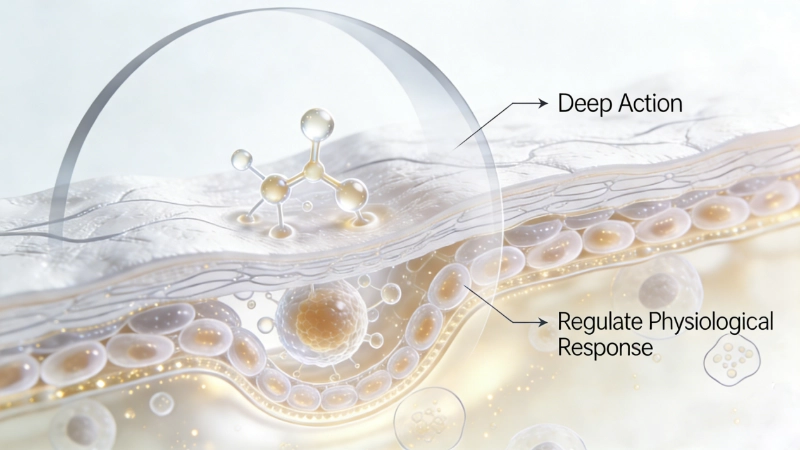
Skin aging is closely associated with a gradual decline in epidermal lipids, especially ceramides. As ceramide content decreases, the skin barrier weakens, leading to moisture loss, reduced mechanical resilience, and increased susceptibility to wrinkle formation.
From a structural standpoint, ceramides for skin plays several critical roles:
• Stabilizing the lamellar lipid structure of the stratum corneum
• Enhancing moisture retention and reducing water loss
• Supporting resistance to mechanical stress that contributes to wrinkle depth
Rather than acting as a surface-level cosmetic ingredient, ceramides influence how skin responds to repeated deformation over time, making them highly relevant in well-aging applications.
Human Clinical Evaluation of Viablife Ceramide 50
Viablife Ceramide 50 was evaluated through a controlled human test involving continuous topical use at a concentration of 1.0% over a two-week period. Sixteen volunteers participated in the study, with skin condition changes assessed using objective instrumental methods.
Wrinkle-related parameters were analyzed using three-dimensional skin imaging technology, while elasticity was measured using professional-grade mechanical testing equipment. This combination allows both surface morphology and deeper biomechanical properties to be assessed simultaneously.
Such an approach provides a realistic picture of how ceramide for skin well-aging performs under actual use conditions.
Ceramides for Skin Wrinkle Reduction Across Multiple Indicators
Wrinkles are complex structural features that cannot be accurately described by a single metric. In this evaluation, wrinkle changes were assessed across four independent dimensions, offering a comprehensive understanding of skin surface improvement.
Multi-Dimensional Wrinkle Improvements After Two Weeks
Following two weeks of continuous application, the following average changes were observed:
• Wrinkle length decreased by 10.92%
• Wrinkle area decreased by 8.55%
• Wrinkle volume decreased by 9.20%
• Wrinkle count decreased by 32.52%
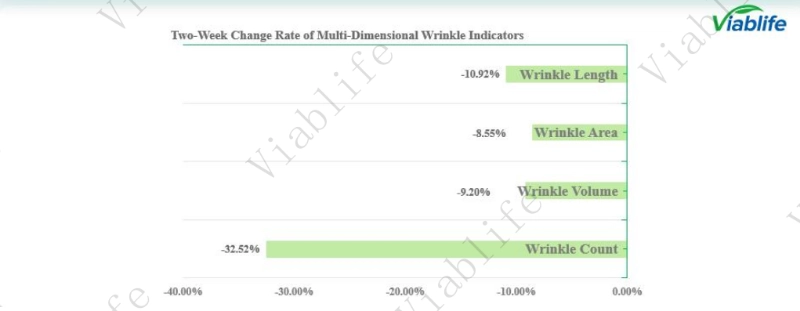
The reduction in wrinkle count is particularly significant, as it reflects an overall smoothing of the skin surface rather than isolated changes to individual lines. When considered alongside reductions in length, area, and volume, these results indicate that ceramides for skin well-aging can influence both wrinkle severity and distribution.
How Ceramides for Skin Improve Wrinkle Morphology
The observed wrinkle improvements are consistent with known ceramide-driven mechanisms within the skin barrier. By restoring lipid organization between corneocytes, ceramides help create a more uniform and hydrated surface, reducing the appearance and formation of fine lines.
Key functional effects include:
• Improved cohesion between skin cells
• Enhanced water-binding capacity
• Reduced surface roughness detectable by 3D analysis
These effects contribute to visible wrinkle improvement without relying on temporary swelling or film-forming effects, which is critical for sustainable well-aging positioning.
Ceramides for Skin Elasticity and Firmness Performance
Wrinkle reduction alone does not fully define well-aging efficacy. Elasticity reflects the skin’s ability to deform and recover, directly influencing firmness and long-term wrinkle progression.
In this evaluation, two standard elasticity parameters were measured after two weeks of use:
• F4 value change: –0.94%
• R2 value change: +3.12%
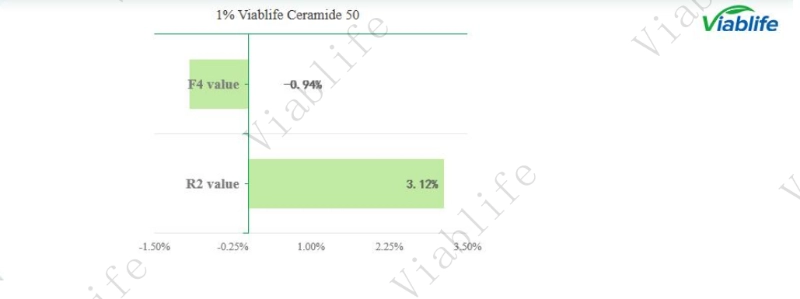
The increase in R2 value indicates improved overall elasticity and recovery ability, suggesting that skin treated with ceramide for skin well-aging becomes more resilient to mechanical stress. The slight decrease in F4 aligns with reduced residual deformation, reinforcing the interpretation of enhanced firmness.
Interpreting Elasticity Results in an Well-aging Context
Elasticity improvements are particularly meaningful because they address the underlying mechanics of wrinkle formation. Skin with higher elastic recovery is less prone to developing persistent creases caused by facial movement and environmental stress.
From a formulation perspective, ceramides for skin that demonstrates elasticity enhancement supports claims related to:
• Improved firmness
• Better skin resilience
• Reduced progression of dynamic wrinkles
These benefits are especially relevant for well-aging products positioned for daily use rather than short-term cosmetic correction.
Viablife Ceramide 50 in Practical Skincare Formulation
Based on its evaluated performance, Viablife Ceramide 50 is suitable for a wide range of well-aging and barrier-repair skincare applications. Typical use cases include:
• Anti-wrinkle facial creams
• Firming and elasticity-focused emulsions
• Barrier-repair serums for aging skin
• Post-treatment recovery products
For brands sourcing ingredients at scale, working with an experienced ceramides supplier that provides consistent quality and technical support is essential. Viablife operates within this framework, offering ceramides raw material solutions supported by application data and formulation compatibility.
As a ceramide manufacturer with an emphasis on functional validation, Viablife supports both performance-driven product development and long-term brand positioning.
Ceramides for Skin Well-aging and Market Relevance
Interest in ceramides for skin well-aging continues to grow as consumers become more informed and skeptical of exaggerated claims. Ingredients supported by objective testing are increasingly favored by brands aiming to build trust and regulatory compliance.
From a commercial standpoint, ceramide-based actives align well with current market demands:
• Suitable for sensitive and aging skin
• Compatible with minimalist and dermatology-inspired formulations
• Supported by measurable performance rather than subjective perception
This combination makes ceramides particularly attractive for brands targeting both professional and consumer skincare segments.
Why Ceramides for Skin Well-aging Drive High-Intent Demand
Search behavior related to ceramide for skin often reflects formulation intent rather than casual curiosity. Buyers and developers are typically looking for:
• Clinically supported well-aging actives
• Ingredients with short-term visible results
• Data that can be translated into compliant product claims
By addressing wrinkles and elasticity simultaneously, ceramides for skin well-aging position themselves as a core structural ingredient rather than an auxiliary moisturizing agent.
Conclusion: Ceramides for Skin Well-aging with Verified Performance
The evaluated performance of Viablife Ceramide 50 demonstrates that ceramide for skin well-aging can deliver measurable improvements in wrinkle morphology and skin elasticity within a two-week period. Reductions in wrinkle length, area, volume, and count, combined with improved elasticity parameters, highlight its role in restoring both surface appearance and mechanical function.
For brands and formulators seeking well-aging solutions grounded in skin biology and validated outcomes, ceramide-based actives represent a practical and credible pathway toward long-term product success.
 Leave a Message