
 Global
 Chinese
 United States
 Spain
Spain Russian
 France
 Germany
 Italian
 Japan
Japan Arabic
 Portuguese
 Korean
 Thai
Thai Greek
Greek India
India

The integrity of the skin barrier is essential for maintaining skin hydration, resilience, and protection against external stressors. Daily exposure to surfactants, environmental pollutants, and chemical irritants can demage epidermal structure, leading to skin dryness, sensitivity, and accelerated aging. Against this background, ceramide for skin has become a core focus in both cosmetic formulation and dermatological research due to its structural role in the stratum corneum.
This article focuses on Repair Efficacy·Viablife Ceramide enhances skin barrier, strictly based on experimental data obtained from a 3D epidermal skin model (EpiKutis). The discussion evaluates how a functional ceramide raw material promotes barrier recovery after chemically induced damage, using validated biological markers and quantified improvement rates.
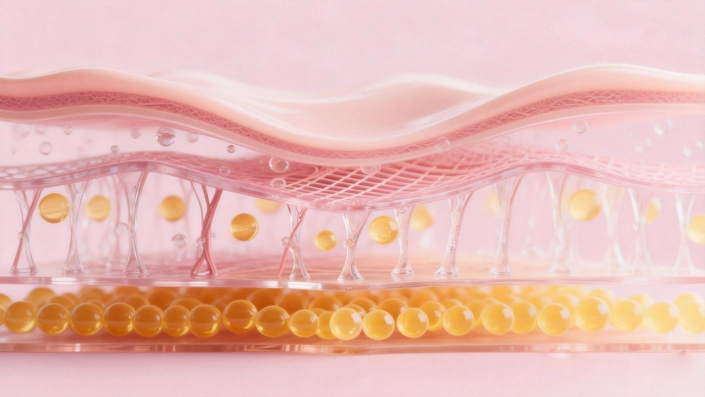
Ceramide for Skin and the Epidermal Barrier Structure
Ceramides are lipid components naturally present in the intercellular matrix of the stratum corneum. They form lamellar structures that regulate transepidermal water loss and skin stability. When ceramide levels are disrupted, barrier function declines rapidly.
From a formulation perspective, ceramide for skin is not merely a moisturizing additive but a structural lipid intended to restore barrier architecture. This distinction underscores the importance of selecting high-quality ceramide raw material with consistent composition and biological relevance.
Experimental Model Used to Assess Repair Efficacy
To evaluate barrier repair objectively, the study applied a 3D Epidermal Skin Model (EpiKutis), which closely mimics human epidermal morphology and differentiation. This in vitro model allows precise control of damage and recovery processes without confounding systemic variables.
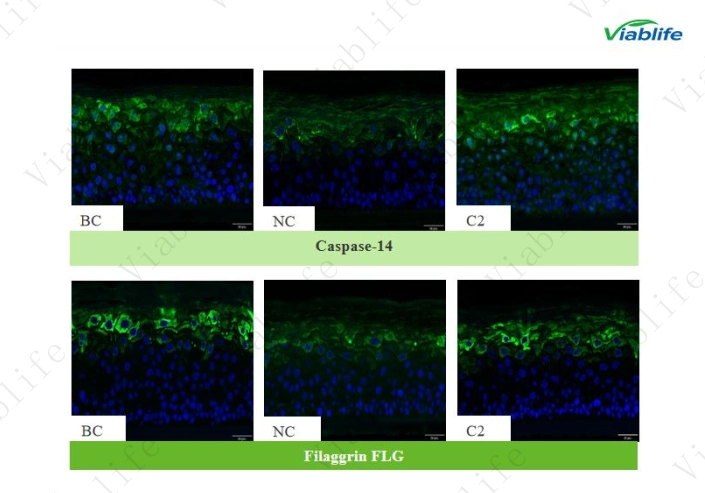
Sodium Lauryl Sulfate–Induced Barrier Damage
Sodium Lauryl Sulfate (SLS) was used to induce controlled epidermal injury. SLS is a well-known surfactant capable of disrupting lipid organization and protein expression within the epidermis, making it a suitable agent for simulating barrier impairment.
Following SLS exposure, the repair efficacy of Viablife Ceramide was evaluated by monitoring changes in two key biomarkers:
• Caspase-14
• Filaggrin (FLG)
These markers are directly associated with epidermal differentiation and barrier maturation.
Caspase-14 Regulation and Ceramide for Skin Repair
Caspase-14 is an epidermis-specific protease involved in terminal keratinocyte differentiation and formation of the cornified envelope. Reduced Caspase-14 expression is commonly associated with compromised barrier integrity.
Observed Changes in Caspase-14 Expression
In the negative control group (NC), SLS exposure resulted in visibly reduced Caspase-14 fluorescence, indicating impaired differentiation. After treatment with 1.0% Viablife Cera 50(containing 0.5% Ceramide NP), the experimental group (C2) demonstrated a marked increase in Caspase-14 expression.
Quantitative analysis showed:
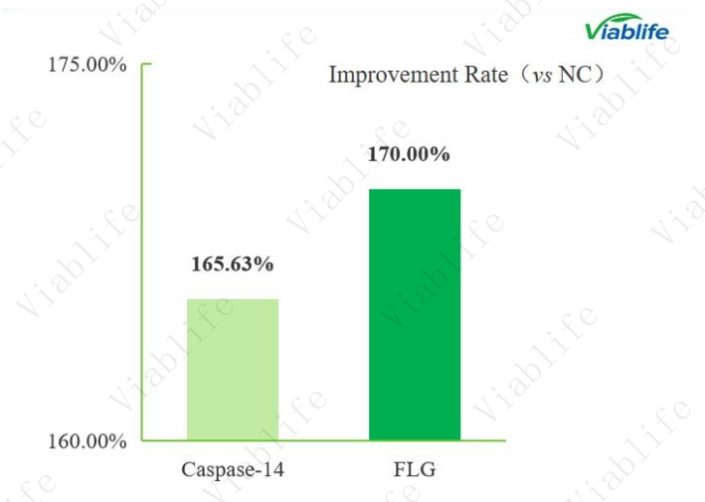
• Improvement Rate vs NC: 165.63%
This result confirms that the applied ceramide for skin effectively supports the biochemical pathways involved in epidermal recovery.
Filaggrin Restoration and Barrier Function Recovery
Filaggrin (FLG) is a structural protein critical for keratin filament aggregation and natural moisturizing factor formation. Its expression is widely used as a benchmark for skin barrier health.
Filaggrin Expression After Ceramide Application
In SLS-damaged samples, FLG levels were significantly suppressed. After treatment with 1.0% Viablife Cera 50(containing 0.5% Ceramide NP), it lead to a substantial restoration of FLG expression in the epidermal layers.
Measured outcomes demonstrated:
• Improvement Rate vs NC: 170.00%
The pronounced recovery of FLG highlights the role of this ceramide raw material in supporting protein synthesis pathways essential for barrier reconstruction.
Interpretation of Improvement Rates in Skin Barrier Repair
The improvement rates presented in this study were calculated using the following formula:
Change Rate = (Post-usage − Pre-usage) / Pre-usage × 100%
Both Caspase-14 and Filaggrin showed recovery levels exceeding 160% relative to the negative control, indicating not only reversal of SLS-induced damage but active promotion of epidermal repair mechanisms.
These results provide quantitative validation for the functional role of ceramide in skin barrier restoration under controlled experimental conditions.
Ceramide Raw Material Selection in Functional Formulations
Not all ceramides deliver equivalent biological outcomes. The study underscores the importance of using a standardized ceramide raw material with proven compatibility in reconstructed skin models.
From Raw Material to Finished Product
High-performance ceramide ingredients are often supplied in formats such as:
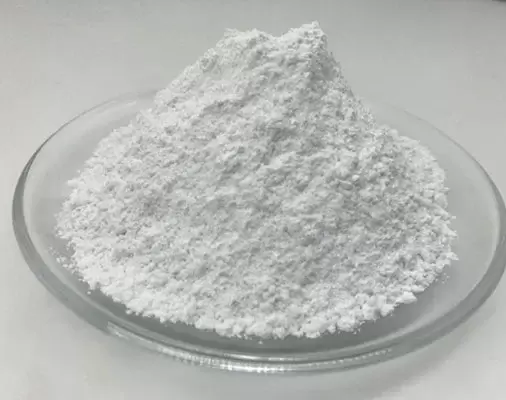
• Ceramide powder for precise formulation control
• Pre-dispersed ceramide systems for emulsions
A consistent ceramide manufacturer ensures batch stability, reproducible efficacy data, and compliance with cosmetic raw material standards. These factors are critical when translating in vitro efficacy into commercial skincare applications.
Advantages of Ceramide Powder in Barrier Repair Products
Ceramide powder offers formulation flexibility and concentration accuracy, making it suitable for products targeting barrier repair and post-irritation recovery. In research-driven formulations, powder-based ceramides allow precise dosing, as demonstrated by the 1.0% application in the experimental group.
When sourced from a reliable ceramide manufacturer, ceramide powder can maintain structural integrity during processing while delivering consistent biological performance.
Linking 3D Skin Model Results to Product Development
The use of a 3D epidermal model bridges the gap between theoretical function and applied formulation science. By demonstrating measurable increases in Caspase-14 and Filaggrin, this study provides actionable data for:
• Barrier repair creams and serums
• Post-cleansing recovery products
• Sensitive skin formulations
The results reinforce the value of ceramide for skin not as a marketing concept, but as a functionally validated ingredient supported by biological markers.
Role of Ceramide Manufacturer in Quality and Consistency
A qualified ceramide manufacturer plays a central role in ensuring that experimental efficacy can be replicated at scale. Consistency in ceramide composition directly affects protein expression outcomes observed in laboratory models.
Manufacturers supplying ceramide for advanced skincare applications must align raw material specifications with experimental benchmarks such as those demonstrated in the EpiKutis model.
Conclusion: Functional Evidence Supporting Ceramide for Skin Repair
Based strictly on the provided experimental data, Viablife Ceramide demonstrates clear repair efficacy in a 3D epidermal skin model subjected to SLS-induced damage. The significant upregulation of Caspase-14 and Filaggrin confirms its role in restoring epidermal differentiation and barrier integrity.
For formulators and brands seeking scientifically supported ingredients, this study highlights the importance of selecting a validated ceramide raw material, whether in ceramide powder form or integrated systems, from a dependable ceramide manufacturer.
Ultimately, these findings reinforce ceramide’s position as a foundational component in barrier-focused skincare, supported by measurable biological outcomes rather than repeated claims or redundant narratives.

 Leave a Message